



The many thrills of seaweed
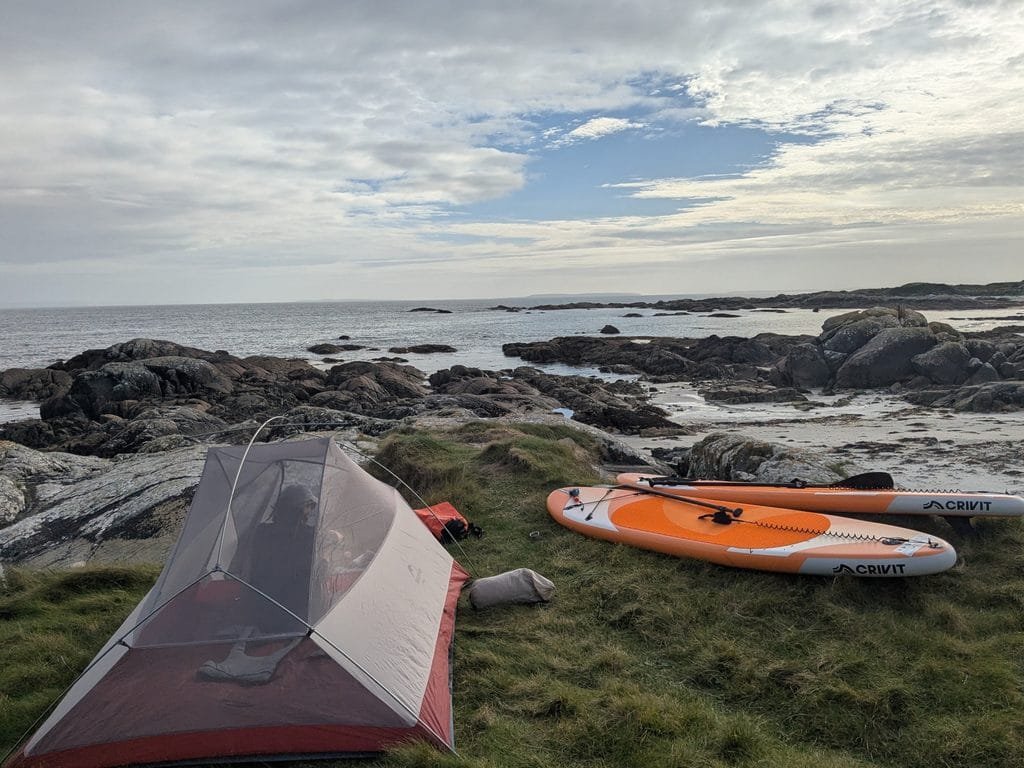
If you asked anyone which country is the most famous for eating seaweed, most would probably answer “Japan.” But did you know that approximately 40,000 tones of seaweed are harvested each year in Ireland? Ireland has at least a 900-year-old tradition of eating seaweed and since we picked up paddleboarding as a new hobby to venture out onto the ocean, we’ve become totally fascinated by all the different kinds, shapes, and sizes of seaweed we’ve come across. If you go snorkeling along the west coast (not the one that everyone knows as U2 would say), an entirely new world opens up. We honestly used to think snorkeling was only exciting in the tropics, but here in the North Atlantic along the Irish coast, the underwater life is incredible!
Underwater world
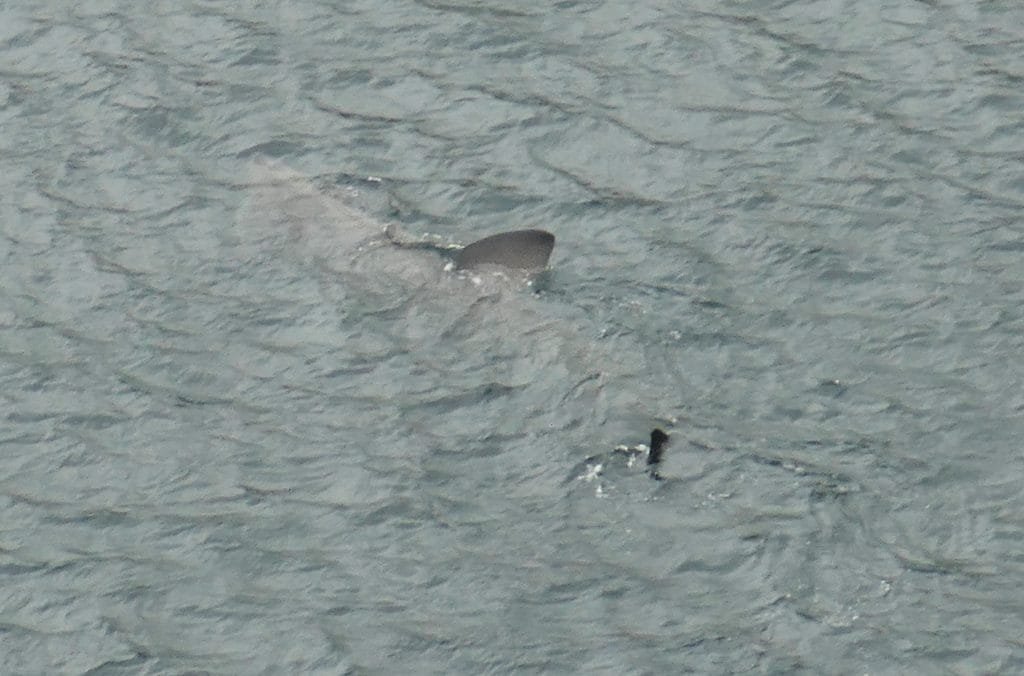
It’s not just the seaweed that’s fascinating in this new underwater world we’re discovering; it comes with tons of other interesting inhabitants. We’ve already swum with seals, which we spot regularly as they look for snacks in the massive kelp forests. Surprisingly, there are even dolphins and sharks around here… In fact, we were lucky enough to spot several basking sharks in Keem Bay earlier this year; suddenly, Erik shouted, “I see a shark!” which was hard to believe at first, until it was confirmed by others around us and turned out to be an entire group of basking sharks! While they are legitimate sharks, they fortunately don’t come with rows of sharp, terrifying teeth. Instead, they’re filter feeders. Learning that, we happily continued our swimming endeavours!
Viola needed some convincing though, to get into the cold water; the North Atlantic is no joke. Irish people are tough for sure; when we were walking along the coastline in february and saw warning signs for winter swimming dangers, we were laughing and joking about who would be mad enough…until we spotted more and more swimmers in the freezing water. Yup, we still have a long way to go!
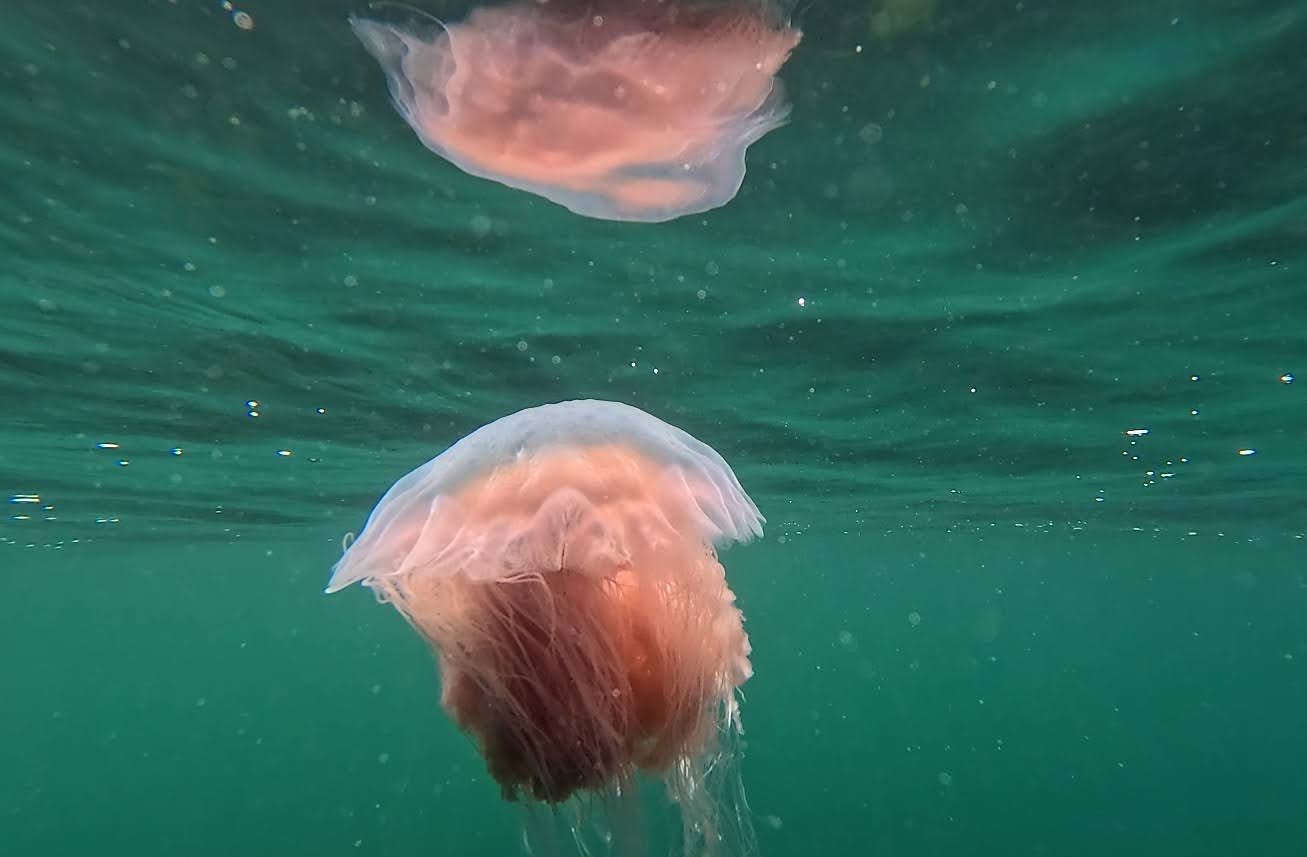
During summer it did warm up a bit, and Viola got further than just dipping in her toe. Armed with wetsuits (only shorties!) and a GoPro, we discovered more and more of our underwater backyard. What an amazing world! Huge kelp forests just offshore, and at low tide you can easily swim right into them. Unfortunately jellyfish were also part of the game this summer, and while most of them don’t sting (or just a bit), we did spot a Lion’s Mane; that’s definitely one to avoid (and it looks like it too!).
What’s so exciting about seaweed?
But let’s get back to all the incredible kinds of seaweed, because over 500 species of green, red, and brown seaweed grow along Ireland’s rocky shores! It turns out seaweed has deep cultural roots here. Our neighbour told us that back in the day, locals would harvest it in spring to fertilize their fields and even feed it to their cattle. Besides eating a bit of seaweed, the cows here love the ocean too; they actually swim from island to island to prove the grass really is greener on the other side. Taking a seaweed bath is another popular local tradition. We’re not convinced yet, but people seem to love a good, relaxing soak in a warm, slimy tub. We should give it a try this winter. And it’s certainly not just feed for livestock; seaweed is a huge part of the local food culture, too. Dulse (known locally as dillisk) is a red seaweed that locals have been harvesting and chewing as a salty snack for hundreds of years.
The thrills of seaweed don’t end here; there are also initiatives developing it as a source of sustainable energy. For example, researchers at the University of Galway are exploring how Irish seaweed can be cultivated and converted into renewable fuels in a sustainable way. Talking about the benefits of seaweed: it is also a great Nature-based Solution (sorry, Viola talking here, but research and daily life often intertwine). For example, seagrass beds have been proven to reduce wave energy and stabilize ocean sediments. Just like Irish kelp forests (which can grow up to 30 meters deep), they provide essential nursery habitats and shelter for fish and other marine life.
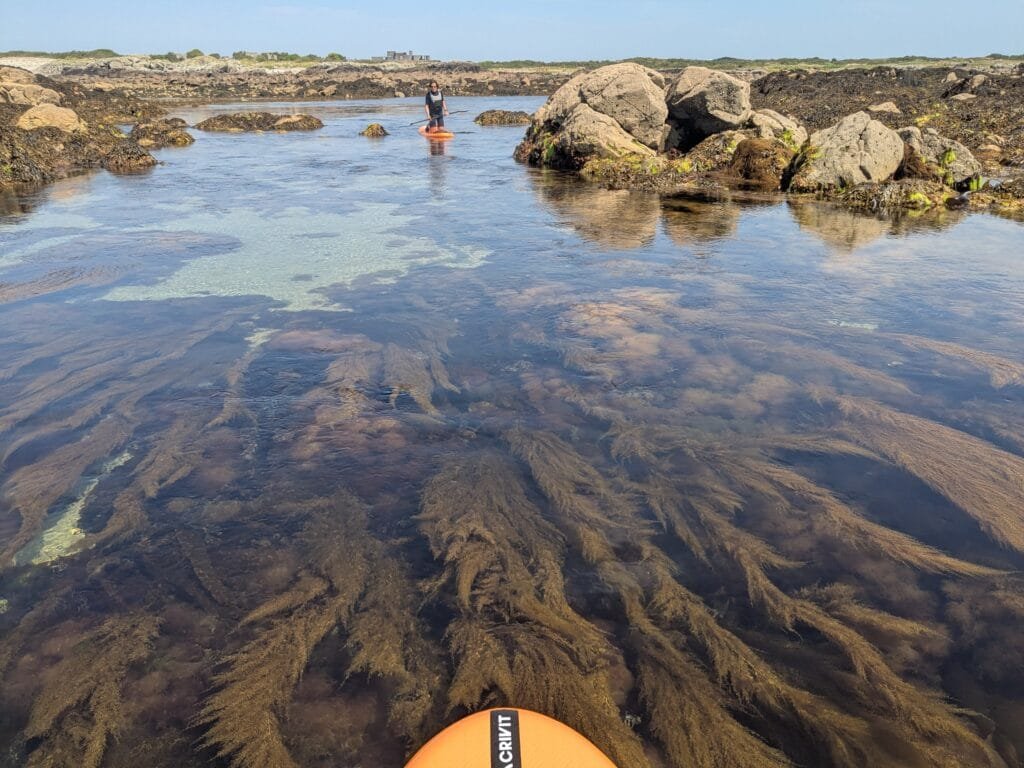
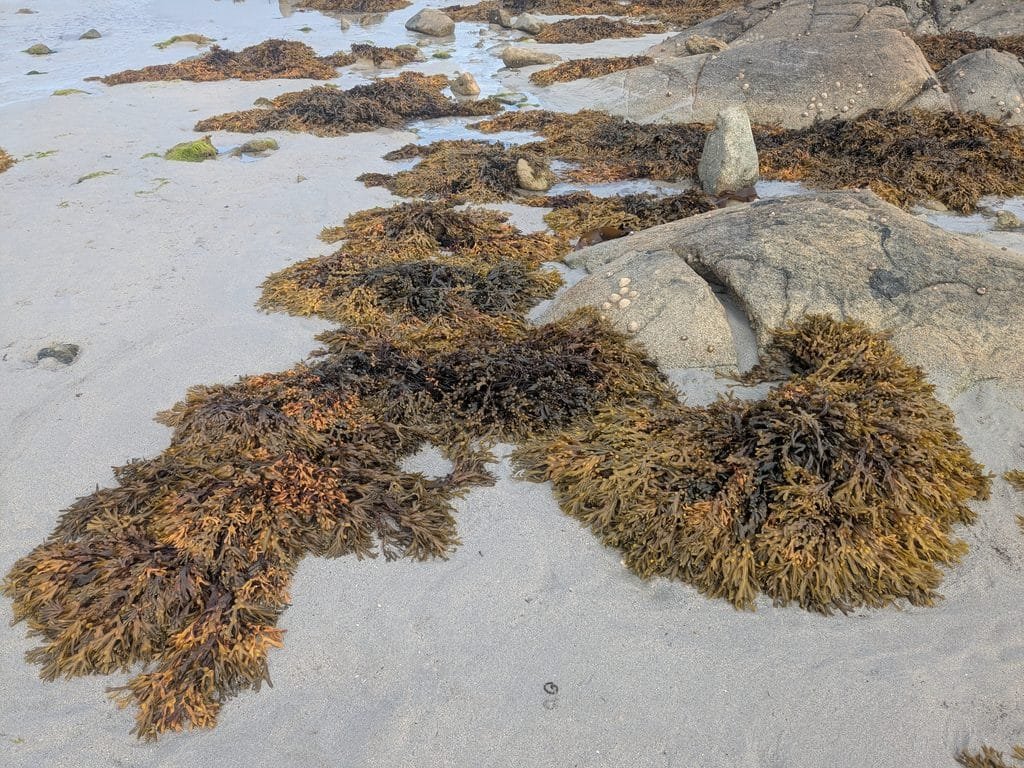
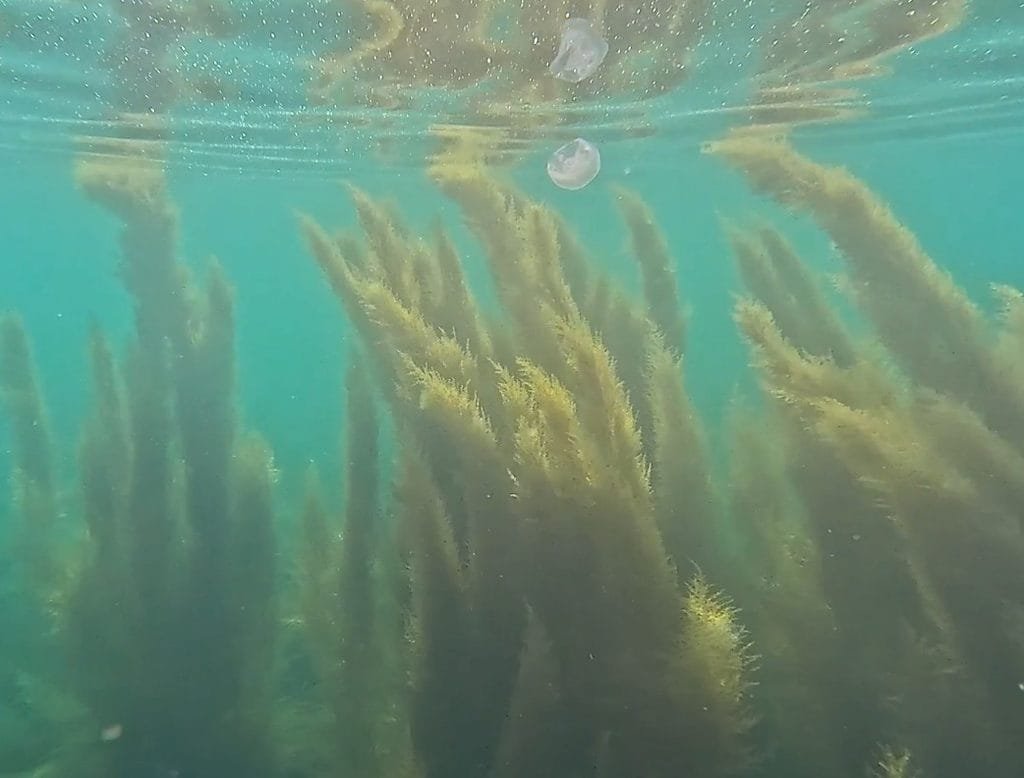
And perhaps that is the real thrill of seaweed: the more you look into it, the more useful they seem. It can end up on your plate, in your clothes, potentially in our fuel tanks, and also doing its bit to protect our coastlines and provide a home for marine life. Not too bad for something we normally just tried to avoid stepping on at the beach because of the smell! We definitely gained much more respect for seaweed and look at it with different eyes now… and yet, there is so much more to discover.




Mooi verhaal hoor! Zo veel te ontdekken…. mooie foto’s ook, die kwal vind ik minder haha.